
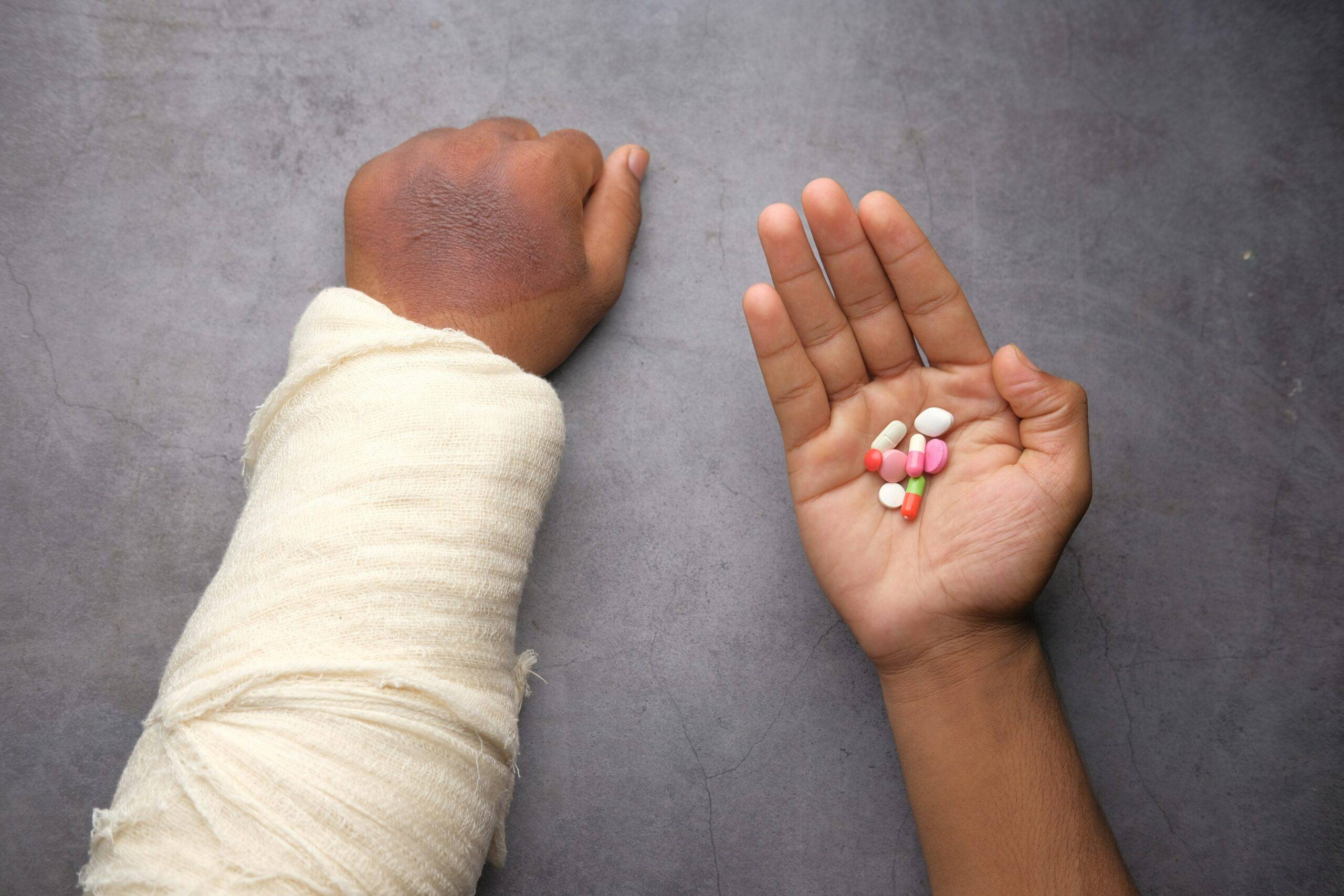
Nutrition plays a key role in recovery from surgery, especially for athletes undergoing orthopedic surgery requiring some immobilization such as an ACL surgery or UCL reconstruction. Post-surgery nutrition should promote the healing process, limit muscle atrophy, and support the immune system. Let’s talk about essential nutrients to include as part of an overall healthy diet and dietary supplements that may assist in the overall healing process.
Nutrients that promote healing include those that assist in tissue building, wound healing, and reducing overall inflammation. Nutrients that limit muscle atrophy, or muscle breakdown, are those that increase muscle protein synthesis. We can build muscle through 1) physical activity or stress to the muscle or 2) through nutrients that turn on muscle building. When an athlete is immobilized, they need to emphasize turning on muscle building through nutrients.
Finally, nutrients that support the immune system help reduce the risk of infection or illness during the recovery process. This is especially important when an athlete is spending more time in hospitals and doctors offices before and after surgery.
Vitamin D
Vitamin D3 is thought to be involved in over 1000 responsive genes involved in muscle protein synthesis, muscle strength, size, reaction time, balance, coordination, endurance, inflammation, and immunity. Adequate amounts of Vitamin D are necessary to ensure sufficient rates of bone growth, density, and remodeling. We often hear about an association between vitamin D status and bone health, especially stress fractures and fractures. However, vitamin D is not only an essential nutrient for bone health, it is needed to properly heal a broken bone. Additionally, low vitamin D levels have been shown to impair strength gain after orthopedic surgery (ACL surgery).
A diet that includes dairy products and a multivitamin supplement with some Vitamin D (1000-2000 IU) may be enough for most people. Since Vitamin D is a fat-soluble vitamin, the average person should not take a large dose without consulting their healthcare team. But athletes with a broken bone or requiring surgery for a fracture should ask their primary care physician to check their lab work for a Vitamin D deficiency. In the case of a vitamin D deficiency, a dietitian can assist in determining the proper vitamin D dosage. They can also determine if a calcium supplement is needed as well.
Omega-3 Fatty Acids
Omega-3 fatty acids, also known as fish oils, have anti-inflammatory properties. They may be an effective supplement for certain athletes under prolonged or excessive inflammation. Inflammation aids in wound healing and assists in recovery, so fish oil may not be necessary immediately post-surgery. However, there is evidence to suggest that omega-3 fatty acids can increase muscle protein synthesis and decrease muscle protein breakdown. This can be especially beneficial for an athlete with an immobilized limb at risk of atrophy. There is some evidence that fish oils may act as blood thinners and affect blood clotting, but more recent research suggests this is not the case. Regardless, you should let your surgeon know if you are taking fish oils, as they may tell you to stop taking them before the surgery.
Β-hydroxy-β-methyl butyrate
Some surgeries require a period of immobilization, such as being on crutches or having an immobilized bone, leaving athletes at risk of muscle loss. Eating protein can signal the body to increase muscle protein synthesis, which means the creation of muscle tissue. Thus, increasing protein intake during surgery recovery is one of the most straightforward strategies to prevent a loss of muscle mass. In injuries where disuse does not occur, lean protein remains an integral part of the diet as it plays a significant role in muscle recovery and preserving lean mass.
However, when there is no stressor to the muscle, protein alone cannot prevent muscle loss. Multiple studies have proven that the amino acid leucine, in addition to regular protein intake, helps prevent muscle catabolism. HMB, or Β-hydroxy-β-methyl butyrate, is an L-leucine metabolite that is more readily available for absorption than the amino acid. A daily dose of 3g of HMB has been shown to protect muscles from degradation during periods of inactivity. HMB may assist in enhancing power output in a rehabbing athlete. It is important to note that some sports organizations consider individual amino acids, or HMB specifically, to be an impermissible supplement, so check with your organization before supplementing with HMB.
Collagen
Collagen is a structural protein that helps makes up our connective tissue, specifically in ligaments, which hold our bones together, and in tendons, which attach muscles to bones. It also helps form the protein framework of bones and teeth. Supplementing with collagen has been shown to increase collagen production, improving tendon and ligament repair. Collagen formation seems to increase when collagen is co-ingested with a low dose of vitamin C. Look for a supplement with about 50 mg of vitamin C or less with at least 15 gm of collagen.
Probiotics
Probiotics are live microorganisms (bacteria!) that benefit the intestinal microflora (gut) and/or the immune system. Depending on the strain of the probiotic, the bacteria may go through most of the digestive tract without being digested. The probiotic then interacts with the bacteria already living in our gut. Inside the gut, probiotics and our gut bacteria work together to fight inflammation and illness in our body.
Probiotics are most beneficial post-surgery on three occasions. First, when an athlete is on an antibiotic, the antibiotic kills the good bacteria in the gut. Probiotics can help recolonize our gut bacteria. Second, an athlete taking pain medication may experience constipation or other GI distress. Probiotics can help modulate these unpleasant side effects. And finally, when an athlete is hospitalized for a prolonged time. As clean as hospitals are, they are also at higher risk of infection or illness. A probiotic can help support the immune function to fight off illness after major surgery.
Benefits of Supplements After Surgery
While a balanced diet may not be guaranteed to decrease recovery time from surgery, the right nutrients can play an essential role in repairing tissue damage and supporting the immune health of orthopedic surgical patients. These were just a few specific supplements that can promote surgery recovery. Still, the recovery timeline is different for each type of surgery. It’s a good idea for athletes to consult with a dietitian to individualize a plan for their specific situation.
Sports injuries are a nearly inevitable part of the process for athletes. Even the most conscientious athlete can fall prey to a coincidence, collision, or another scenario that leaves them banged up. While we can’t fully prevent them, the good news is we can utilize nutrition strategies as part of a holistic approach in combination with other disciplines like physical therapy, athletic training modalities, resistance training, mental health to minimize recovery time and get athletes back on the field!
While this post is specifically on the best supplements to take after surgery to promote recovery, it’s important to note that once the athlete starts physical therapy or is back in activity, there will be a lot of soreness and inflammation. Check out our posts on nutrition for exercise recovery and cherry juice for supplements that can assist in fighting inflammation.
This post is meant to be informative and is not meant to provide nutritional advice. In order to optimize recovery, work with your healthcare team. For a customized approach to recovery nutrition, book a consultation with me.
Sources for Best Supplements After Surgery
- Rehabilitation Nutrition for Injury Recovery of Athletes: The Role of Macronutrient Intake
- Vitamin D supplementation in fractured patient: how, when and why
- Low Vitamin D Impairs Strength Recovery After Anterior Cruciate Ligament Surgery
- Current concepts in vitamin D and orthopaedic surgery.
- Dietary strategies to attenuate muscle loss during recovery from injury.
- Leucine partially protects muscle mass and function during bed rest in middle-aged adults.
- Effects of β-hydroxy-β-methylbutyrate supplementation on recovery from exercise-induced muscle damage: a mini-review.
- The effect of protein and carbohydrate supplementation on strength training outcome of rehabilitation in ACL patients.
- Effects of β-Hydroxy β-Methylbutyric Supplementation in Combination with Conservative Non-Invasive Treatments in Athletes with Patellar Tendinopathy: A Pilot Study.
- Minimizing Injury and Maximizing Return to Play: Lessons from Engineered Ligaments.
- Exercise-induced stress behavior, gut-microbiota-brain axis and diet: a systematic review for athletes.
- International Society of Sports Nutrition Position Stand: Probiotics.
- Probiotic Supplements Beneficially Affect Tryptophan-Kynurenine Metabolism and Reduce the Incidence of Upper
- Respiratory Tract Infections in Trained Athletes: A Randomized, Double-Blinded, Placebo-Controlled Trial.
- Nutritional Strategies to Offset Disuse-Induced Skeletal Muscle Atrophy and Anabolic Resistance in Older Adults: From Whole-Foods to Isolated Ingredients.

