
Today, we are talking about one of my favorite breakfast foods: warm, cozy Shakshuka. I had it for the first time a few years ago in Mexico City, and it’s been a brunch favorite in my house ever since. This one-pan egg recipe is vegetarian yet high in protein, making it perfect for veggie lovers.
Jump to Recipe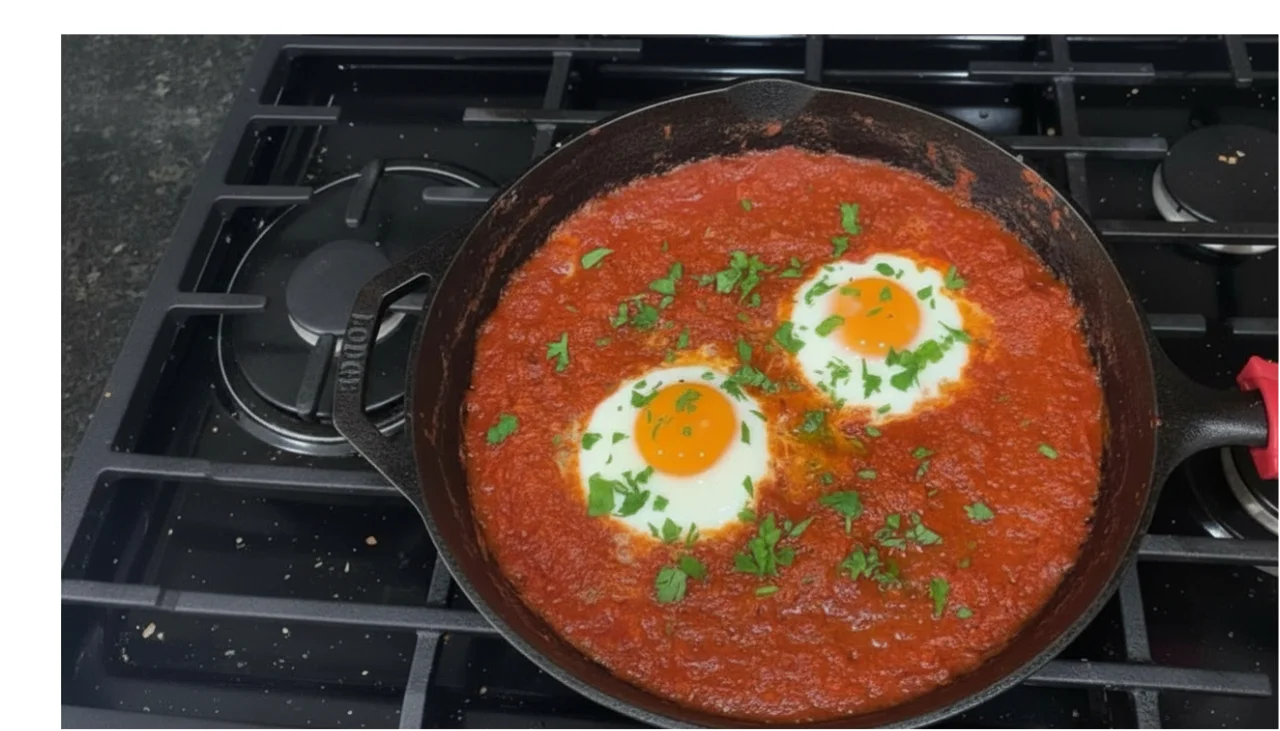
What is shakshuka?
Shakshuka is a warm, hearty tomato-based breakfast stew with poached eggs (or eggs in a hole) baked right in. Its name literally means “mixture” or “mixed” in Arabic, depending on the region, or “to bubble”. You might have seen it before, as it’s an incredibly photogenic dish and looks like eggs in tomato sauce.
This dish originates from North Africa. And while Greece and hummus get all the fanfare for the Mediterranean diet, the Mediterranean also encompasses the Maghreb region, including Tunisia, where Shakshuka is thought to have originated. It is now a popular Middle Eastern breakfast with different regional variations adding their own flair.
Because it originates from the Mediterranean, shakshuka has all the heart-healthy fats, antioxidants, and blood-sugar-stabilizing fiber of the Mediterranean diet, but it also has deep, warm flavors and the right bit of spice.
Why do I love shakshuka for an athlete’s breakfast?
I love this recipe because it’s easy to prep in bulk for the week, high in protein, customizable, and uses one pan. It takes about 20 minutes, making it perfect for busy schedules, and it’s a great way to get veggies at breakfast, which can be tough! With the bell peppers and tomatoes, this dish is rich in antioxidants to help fight exercise-induced inflammation. It’s a great, nutrient-dense meal that checks all the boxes.
Equipment: Cast-Iron Shakshuka
I like to use a cast-iron pan to make this dish. Feel free to use whatever large type of skillet or saucepan you have. Some people don’t love using cast iron because they think tomato breaks it down. I like to use it, so that’s what I’m gonna do.
You can also use an oven-safe pan. Some people like to start the shakshuka on the stovetop and then finish baking it in the oven – this helps the eggs cook evenly and can make them less runny.
If you want to pop it in the oven toward the end, use a pan that is safe up to 500 degrees. The back of the pan should say “oven safe” or safe up to X temp, and that’s how you’ll know. If it doesn’t have either of those, use the name on the back of the pan and run a quick Google search to determine if it is oven-safe.
Quick & Easy Shakshuka
For this recipe, use 1 diced onion and 1 diced red bell pepper. Cut the stems off, peel the outer layer of the onion, and cut both vegetables into chunks. Place them in a food processor to dice.
If you don’t have a food processor or if you love to chop and have time to enjoy the slow cooking, you can dice it. But for those athletes without a alot of time, go ahead and throw them in the food processor for diced veggies in a few quick pulses.
While the recipe calls for a red pepper, I like to throw in whatever color pepper I have on hand. I made fajitas last week, so I’ve got leftover orange and yellow peppers, and so I’m gonna throw in all three. Think of shakshuka like a stew or soup – it’s easy to tweak and customize based on what you have available (use up those leftovers!), and what tastes good to you. Make it different each time!
How to Make Shakshuka (Step-by-Step)
Heating Oil and Smoke Points
Prepare your pan with a bit of olive oil. Maintain a low to medium heat, as olive oil has a moderate smoke point. Keep the heat below the smoke point to retain maximum benefits and develop rich flavors. If steam or smoke appears, lower the temperature.
Cook Aromatics/Veggies
Next, you’re going to add your onion and bell pepper and cook them for about 5 minutes, or until the onion turns translucent, or see-through.
Let them cook, check on them every few minutes, and stir them occasionally.
Getting Spicy
Once the onion and peppers have cooked, we are ready to add our spices: garlic, paprika, cumin, and chili powder. Again, this is where your flavor preferences can come into play. Think of this like a chili – the flavor develops over time, even in the fridge, and everyone has a different preference for how much of each spice.
When making shakshuka for the first time, I suggest you follow the recipe and modify it next time as you prefer. If you like a spicier shakshuka, add more chili powder, or get frisky and sub in red pepper flakes. You could even add in diced jalapeño when you add in the bell pepper and onion.
Smokier? Increase the cumin, or use a smoky paprika.
A bolder flavor? Increase the paprika.
Want to add a citrus component? Coriander or sumac, both spices originating in the Middle East, add a warm yet light citrus flavor.
If you have access to international spices, Aleppo pepper would be a fantastic, authentic addition to this dish.
Many people believe harissa is essential to authentic Shakshuka, but I know it isn’t in everyone’s kitchen. If you are able to pick up harissa powder, or better, paste, you could substitute that for some or most of the garlic, cumin, and chili powder.
After you let those spices cook for about a minute, the dish should start to smell rich and smoky, and it will turn a lovely deep red. While they are cooking, get your tomatoes ready.
Add in the tomatoes.
If you want to do a fresh tomato, amazing, it’s very easy. I suggest Roma tomatoes. You will boil the tomatoes in water until the water comes to a boil and the tomatoes are soft. Then drain the water from the tomatoes, put them in an ice bath, and the skins will peel right off.
You’ll need about 28 ounces of tomatoes for this recipe, and you can use whatever texture you’d like. Traditionally, the recipe calls for a whole tomato that breaks down as it cooks, but if you’d like to start with a diced or crushed texture, that will work!
My preference is to use a whole tomato and run it through the food processor until it reaches a crushed texture, because I like that flavor best and prefer a less chunky texture.
Add tomatoes and turn up the heat just a touch so the dish can simmer. You may see the liquid bubble. At this point, you can add salt and pepper to taste if you’d like. Simmer for as long as you’d like, or for as long as you have – the low-and-slow method is perfect for letting the bold flavors develop.
Tips for Perfectly Set Eggs
Traditional shakshuka calls for poached eggs, and my 12-inch pan fits six, with enough sauce for about 1 cup per egg. If a soft or runny egg isn’t for you, no worries! You can cook the eggs longer until they are firmer, or you are welcome to add scrambled eggs (the Turkish version!) or fried eggs to the dish separately. You’ll just have to use an extra pan!
You can also skip the eggs and do a silken tofu or cooked lentils instead, or add more veggies like sweet potatoes.
To cook the eggs, create six small pockets in the sauce and add an egg to each one. Then cover the pan as best you can and pop it in the oven at 350 degrees, or continue cooking on the stove until the egg is cooked to your liking.
That’s it! You’re done! Scoop out an egg and some veggies and get ready to add your toppings.
What to Serve with Shakshuka
Shakshuka typically comes with goat or feta cheese on top, and a sheep’s cheese would also be good. I love the salty creaminess of a goat cheese, but feel free to use whatever crumbled or shredded cheese you have. I like athletes to get a little dairy to get some extra calcium, but you can always skip it if you want to, or need to, do dairy-free.
This recipe also traditionally comes with fresh herbs on top, usually cilantro and parsley, but I’ve also seen mint. Did I mention this recipe was versatile? Of course, fresh veggies look nice and add a light element to a hearty dish, but also recognize that they are a little bit more expensive and a little bit less shelf-stable, so a dried herb is going to be just great here. Or you can skip the herbs – this recipe is already so flavorful!
If you are serving a crowd, go ahead and top the entire thing with herbs and cheese. If you are using this for meal prep this week, add the herbs and cheese after you’ve reheated the dish each morning.
Tip: If you do buy fresh herbs, clean the remaining herbs, let them dry completely, and then place them in a Ziploc baggie in the freezer for next time!
Finally, shakshuka usually comes with a crusty bread on the side to soak up the extra broth. I love sourdough, so that’s typically what I use, but crackers or gluten-free crackers will work as well. Or feel free to skip the bread and add a side of fruit for a carbohydrate to round out this dish into a meal.
Storage & Make Ahead Tips
Since this makes a large amount, it is the perfect make-ahead breakfast. You can either freeze or refrigerate it.
Freezing
For meal prep freezing, stop before adding eggs. Make sure the shakshuka cools completely, then pour a portion into souper cubes or ice cube trays, add a label, and pop into the freezer.
Allow the shakshuka to cool completely, and then pour a portion into each cube, add a label, and pop them into the freezer.
Reheating instructions: You can either take a frozen portion out of the freezer the night before and let it thaw in a bowl in the fridge, or you can pop it out of the freezer in the morning. Either way, you can pop them in the microwave to reheat while you prepare an egg, however you like.
In my experience, the egg doesn’t freeze very well, so we wait for this stage. If you want to skip the egg and do lentils or tofu, those will freeze along with the sauce.
Storing in the fridge
I find it easiest to cover the whole pan in foil and pop it in the fridge. Each morning, scoop out an egg or two and some stew, and stick it in the oven. This should last 6 meals with one egg or 3 meals with 2 eggs, and will stay good in the fridge for that long.
Once I’ve eaten for two days, I transfer it into an airtight container for freshness and to save space in my fridge!
Quick & Easy Shakshuka
Equipment
- 1 cast iron pan Or other oven-safe sauce pan.
Ingredients
- 1 tbsp olive oil
- 1 medium onion, diced
- 1 medium red bell pepper, diced
- 3 cloves garlic
- 3 tsp paprika
- 1.5 tsp cumin
- 3/4 tsp chili powder
- 1 tsp sumac Optional!
- salt
- pepper
- 28 ounces tomatoes
- 6 eggs
- 1 tbsp goat cheese Or feta.
- Cilantro and/or parsley Optional to garnish.
Instructions
- Heat olive oil in a pan.
- Add garlic, onion, bell pepper, and any other veggies to the pan. Cook for about 5 minutes, or until onion is translucent.
- Add desired spices to the veggies and stir. The mixture should be bright red and smell amazing. Cook for about one minute.
- Pour in the tomatoes and allow dish to simmer.
- Season with salt and pepper to your liking.
- Create six small pockets in the sauce and add an egg to each one.
- Cover the pan and pop it in the oven at 350 degrees, or continue cooking on the stove until the egg is cooked to your desire.
- Scoop out some sauce and an egg and place in a bowl. Garnish with cheese and fresh herbs, if desired. Add a piece of crusty bread on the side and enjoy!
Notes
Variations/Modifications
High protein: Instead of goat or feta cheese, add cottage cheese on top before serving, or feel free to mix it in to the tomato sauce. You could also go full Middle Eastern and add in labneh, which is a “yogurt cheese” that is thick, creamy, and high in protein, and a staple in Middle Eastern cuisine.
High carb: Add pearl couscous or quinoa directly to the liquid, as you would in a soup or stew. Alternatively, you could pour this mixture over rice, couscous, or quinoa. Think of it like red beans & rice! Of course, you could always add an extra piece of bread on the side to increase the carbs!
Vegan: Add in lentils or chickpeas instead of eggs. Drain and rinse a can of chickpeas, then add them to the dish before adding the tomatoes, so they have enough time to fully cook and soften. This makes a thicker texture, adds fiber, and some extra protein. You can experiment with other types of beans as well! To add red lentils, do so before adding the tomatoes. These would both be great ways to add more fiber to this dish!
Get creative with veggies: Other options include kale or other leafy greens, purple potatoes, and even carrots. The root veggies should be added along with the onion and pepper, while kale or spinach should be added right before the herbs. Or go in the opposite direction and make a green shakshuka, substituting a green pepper for the red one, and add leafy greens and green peas!
Low FOD-MAP: For my FOD-MAP friends, you could sub in leeks or scallions for the onion and garlic. You could also consider using a garlic-infused olive oil and a low-FODMAP tomato sauce instead of the crushed tomatoes.
Dairy-free Shakshuka: This one is easy, just skip the crumbled cheese on top! If you want to add a healing fat, try tofu feta or crumbled/slivered almonds.
Frequently Asked Questions
Is shakshuka healthy?
It doesn’t get much healthier than this! This nutrient-dense and veggie-forward meal is bursting with vitamins, antioxidants, and protein. And as a classic Mediterranean recipe, it has heart-healthy benefits.
Can I make shakshuka for dinner?
Depending on who you ask, any traditional breakfast food can be a dinner food! Traditionally, shakshuka is served for breakfast, lunch, or dinner in the Middle East. It is a complete meal and would be great any time of day. For dinner, it could be fun to add in a type of meatball instead of, or in addition to, the eggs.
Can I make shakshuka ahead of time?
This is one of my favorite prep-ahead recipes. While the eggs are best made fresh, the stewy mixture can be frozen and thawed in just a few minutes without compromising the taste. It’s easy to make a large batch, and I always have some in my freezer.
Final Thoughts
Let me know how you like this dish! I think you’ll agree it is the ultimate comfort food. If this recipe isn’t for you but you are looking for alternate healthy breakfast recipes, check out my freezer breakfast burritos, which are also an excellent prep-ahead breakfast for athletes. They too can be customized and loaded with veggies!

